
Subtotal $0.00



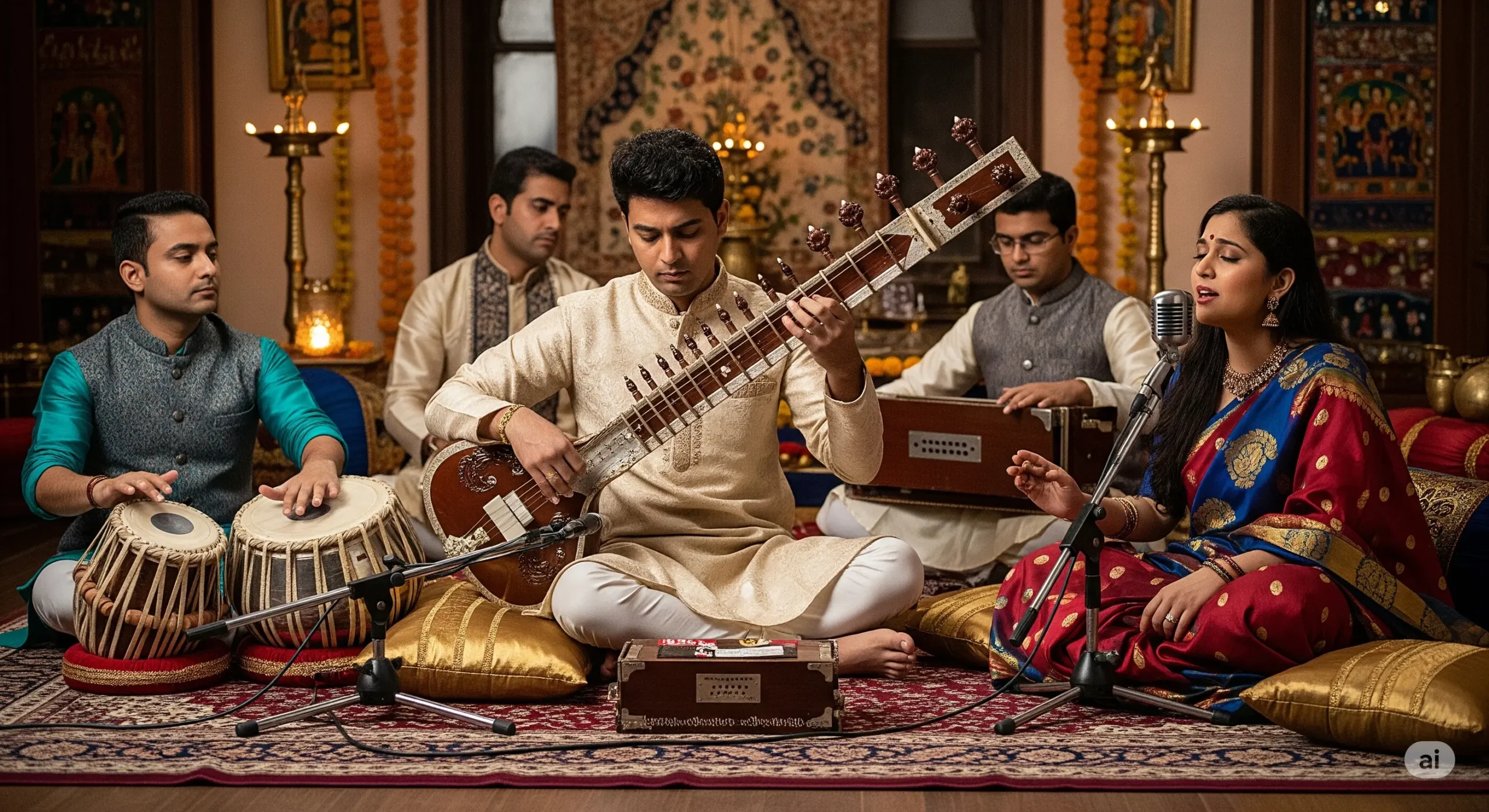
Indian classical music is not just a genre—it’s a journey of emotion, discipline, and deep-rooted cultural heritage. With origins stretching back thousands of years, it stands as a living tradition, constantly evolving while preserving its essence. In a world dominated by fast-paced digital rhythms, the need to nurture and engage with classical music has never been more important.
The Need for Indian Classical Music Today
In our increasingly globalized and distracted world, Indian classical music serves as a grounding force. It promotes mindfulness, emotional balance, and spiritual connection—qualities often lost in the noise of modern life. Its rich tapestry of ragas (melodic frameworks) and talas (rhythmic cycles) is not just a performance art, but also a meditative and healing practice.
From improving concentration in children to offering emotional release for adults, Indian classical music continues to prove its timeless value. It also plays a vital role in preserving India’s cultural identity, especially in an age when many indigenous arts are fading into oblivion.
Two Major Schools: Hindustani and Carnatic
Indian classical music is broadly divided into two traditions: Hindustani (North Indian) and Carnatic (South Indian). While they differ in form, instruments, and expression, both share the same spiritual and cultural roots.
-
Hindustani Music: Focuses more on improvisation and the slow progression of ragas.
-
Carnatic Music: Composition-based, rich in devotional content, and rhythmically intricate.
Legends Who Shaped the Genre
Hindustani Classical Icons
-
Pandit Bhimsen Joshi – A vocal powerhouse known for his deep devotion and technical mastery.
-
Ustad Bismillah Khan – Brought the shehnai into the classical concert hall.
-
Ustad Zakir Hussain – A global ambassador of the tabla and rhythm.
-
Pandit Ravi Shankar – Sitar maestro who introduced Indian classical music to the West.
Carnatic Music Maestros
-
M.S. Subbulakshmi – The nightingale of Carnatic music and a Bharat Ratna awardee.
-
Dr. Balamuralikrishna – A genius who innovated within the tradition.
-
Lalgudi Jayaraman – Revered violinist and composer.
-
T.M. Krishna – Known not just for his musical depth but also for his social activism.
These artists have ensured that classical music is not just a relic of the past but a living, breathing art form—relevant even in the modern world.


